Create to Catalyze: Arts, Media & Design (Arts & Films): This session highlights creative works that discover new perspectives, create powerful narratives and forms, and innovative mediums that move culture-and communities-forward together.
Learning Futures: Co-Designing Education That Works (Education): This session showcases scholarship where educators, students, and technologists discover insights about learning, create inclusive practices and tools, and innovate policy and leadership to boost achievement-online and in person.
Tech Frontiers, Human Impact (Technology): From AI to quantum, this session welcomes work that discovers new capabilities, creates responsible applications, and innovates cross-sector solutions that shape industries-and people's lives-together.
Feb 11, 2026 03:15 PM - 04:00 PM(America/New_York)
Venue : Student Center East - Room 203
20260211T151520260211T1600America/New_YorkSession F - Create to Catalyze, Learning Futures, Tech Frontiers, Public Health Futures
Create to Catalyze: Arts, Media & Design (Arts & Films): This session highlights creative works that discover new perspectives, create powerful narratives and forms, and innovative mediums that move culture-and communities-forward together.
Learning Futures: Co-Designing Education That Works (Education): This session showcases scholarship where educators, students, and technologists discover insights about learning, create inclusive practices and tools, and innovate policy and leadership to boost achievement-online and in person.
Tech Frontiers, Human Impact (Technology): From AI to quantum, this session welcomes work that discovers new capabilities, creates responsible applications, and innovates cross-sector solutions that shape industries-and people's lives-together.
Student Center East - Room 2034th Annual Graduate Conference for Research, Scholarship, and Creative Activitygrad@gsu.edu
03:15 PM - 04:00 PM (America/New_York) 2026/02/11 20:15:00 UTC - 2026/02/11 21:00:00 UTC
NeuroEmpathy: A Living Atlas of the Mind is a multisensory and interdisciplinary artistic installation that visualizes the inner weather of the body, its stress, breath, pulse, and emotional fluctuations through an Afro-digital and Ifá-inspired visual language. This project integrates biomedical signals such as heart-rate variability, gut-based interoception markers, and proprioceptive data with traditional Yoruba cosmologies of divination, transformation, and spiritual attunement. Drawing on my “Chameleonic Code,” the work uses color-shifting pigments, modular synth soundscapes, fiction-like topographies, and symbolic systems (Ona, Nsibidi, Ifá Odu patterns) to create a responsive environment where the viewer witnesses the body as both archive and oracle. The installation translates psychophysiological data into projected maps, light pulsations, textured drawings, and sculptural nodes while offering a poetic, embodied reading of how humans process emotion and memory. The project asks: What if data could feel? What if neuroscience could speak through indigenous epistemologies? How does the body remember, heal, or transform when visualized as a constellation rather than a pathology? By bridging African divinatory frameworks with contemporary neuroaesthetics, the work proposes a future where creativity, healing, and science become co-authors of new forms of knowledge.
03:15 PM - 04:00 PM (America/New_York) 2026/02/11 20:15:00 UTC - 2026/02/11 21:00:00 UTC
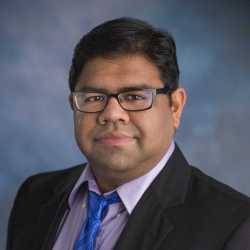
The mridangam is the principal percussion instrument in Carnatic (one form of Indian classical) music and demands a rare combination of finger dexterity, continuously variable stroke dynamics, and precise timbral control to properly articulate rhythmic syllables (Solkattu). Transferring and assessing these highly nuanced, culturally embedded motor skills has remained a significant challenge for both traditional pedagogy and modern technological approaches. This paper presents the Robotic Mridangam Guru, a human-robot interaction system developed to teach Carnatic percussion and preserve its technical and expressive depth. The system consists of two tightly integrated components: 1. An autonomous intelligent tutor that acts as a practice partner by providing real-time, multimodal performance evaluation. 2. An expressive robotic demonstrator equipped with biomimetic end-effectors capable of reproducing the full range of mridangam strokes and timbres with near-human fidelity. The tutoring module combines state-of-the-art computer vision for accurate hand and finger tracking with deep audio models trained to recognize Solkattu patterns and evaluate timbral quality. By fusing visual kinematics with detailed acoustic analysis, the system assesses both the geometric precision of strokes and their sonic outcome. Feedback is delivered instantly through an interactive interface, enabling effective independent practice without requiring a human teacher. Beyond Carnatic music, the framework offers a scalable approach for documenting, transmitting, and revitalizing endangered performative traditions worldwide through embodied robotic tutors.
03:15 PM - 04:00 PM (America/New_York) 2026/02/11 20:15:00 UTC - 2026/02/11 21:00:00 UTC
Fatigue is one of the most exasperating side effects I endure while living with autoimmune disorders. In the United States, fatigue affects a span of 5-45% of the general population. This is due to multiple reasons, some of the most crucial being a defunct covid-19 response, amplified expectations of labor, lack of societal safety nets, and autoimmune diseases. It is defined formally as debilitating periods of exhaustion but culturally can be considered laziness or ignorance. The concept of fatigue is nebulous, and attempting to understand it can offer limited resources that contain traditional and tangible imagery. I respond to this by working with alternative photographic collages, traditional darkroom processes, along with performative sound and movement. These choices are employed to engage with contemporary disability studies and the history of problematic photographic interpretations of human bodies. The result is an exhibition predicated on cultivating a culture of awareness and care by recognizing fatigue as a valid, debilitating experience. Being uses lens-based methods, score-based performative actions, and sound to explore the act of co/existing with fatigue.
 Dr. Ashwin Ashok